
Danbury Arrest Records and Court Charges
Danbury arrest records are police-side records. They can include local arrest-log entries, incident or arrest reports, officer or agency information, date details, and records maintained by the Danbury Police Records and Property Division. Once a person is arrested, the criminal court track is controlled by what the State's Attorney files with the court. That filing creates the charge record that appears in pending case searches, daily dockets, criminal court files, and later conviction displays if the case reaches a qualifying public outcome.
The distinction is important. Arrest or booking information does not prove guilt. A court charge is also not a conviction. It is an accusation that must be handled through arraignment, hearings, plea negotiation, trial, dismissal, nolle, erasure, or sentencing. For custody or DOC status after a Danbury arrest, the Danbury inmate records page is the better path. For the full court case file and outcome, use the Danbury criminal court records page.
The Danbury Police Records and Property Division is the source for this image.
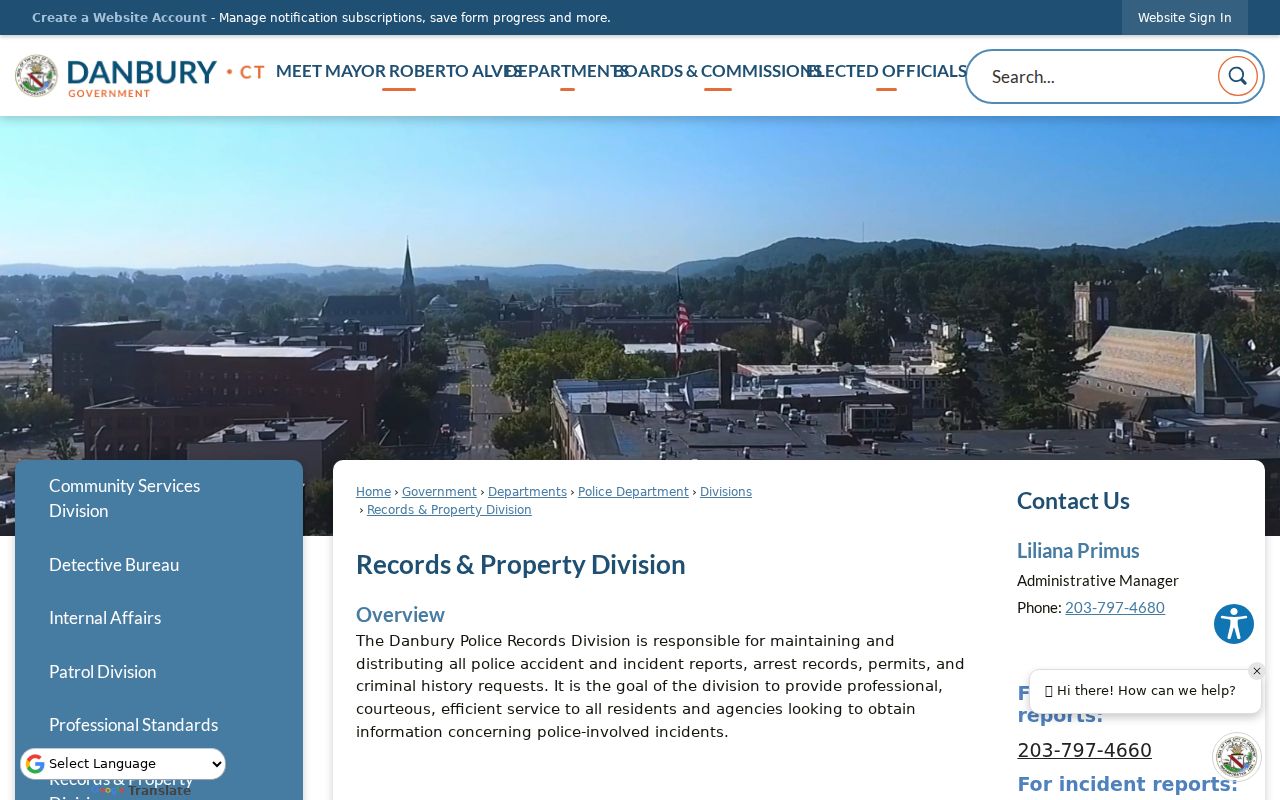
This city source is central because Danbury Police maintains police accident and incident reports, arrest records, permits, and criminal history requests.
Find Danbury Arrest Records and Charges
Use separate sources for each stage. For arrest activity, start with Danbury Police arrest logs and the Records and Property Division. For incident, arrest, accident, and related police records, use the Danbury Police FOIA request form; the manifest row for that PDF did not produce a usable image, so it remains a text link. For formal court charges after arrest, use the Connecticut Judicial Branch criminal and motor vehicle lookup menu, pending defendant search, pending docket-number search, daily docket by court, or conviction search.
- Check the Danbury Police arrest logs for recent police activity if the arrest is local and recent.
- Submit or prepare a police FOIA request when an incident report, arrest report, accident report, or related police record is needed.
- Search Judicial Branch pending criminal and motor vehicle records by defendant or docket number when formal charges may have been filed.
- Use D03D-Danbury Geographical Area 3 or Danbury Judicial District as a court-location filter when the lookup offers it.
- Read each charge status separately because one arrest can lead to several charges with different outcomes.
The official Danbury Police arrest logs page is the source for this image.
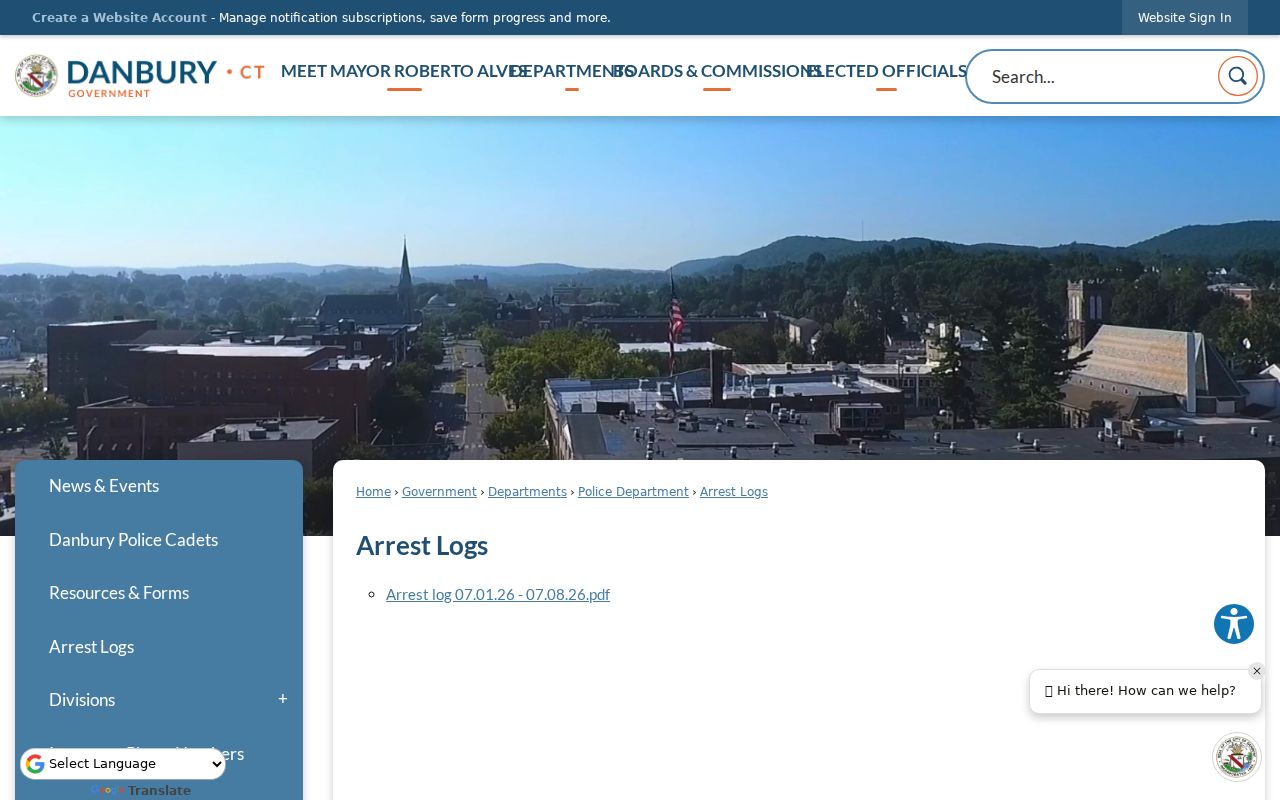
Arrest logs can be useful for recent activity, but the later court docket is still needed to see whether charges were filed and how they changed.
Charges After a Danbury Arrest
Connecticut uses State's Attorneys, not district attorneys. The Judicial District of Danbury State's Attorney and the G.A. 3 Supervisory Assistant State's Attorney handle prosecution roles after arrest. The prosecutor decides what charges to pursue, handles plea negotiations, and makes sentencing recommendations. The research did not identify a Danbury public sample charging document, so the table below explains common charging-document terms without treating each one as a Danbury-only form.
| Document Type | Who Uses It | What It Does | Danbury Reading Tip |
|---|---|---|---|
| Complaint | Police or prosecutor context | States facts or allegations that support an arrest or charge path. | Compare it with the court docket because filed charges can differ from police-side wording. |
| Information or substitute information | Prosecutor context | Lists the formal charges the State's Attorney pursues in court. | Use the docket and clerk record for the current charge list. |
| Indictment | Grand jury or federal context where applicable | Charges a case through an indictment process. | Verify the court level because the research did not show this as the normal Danbury Superior Court lookup path. |
The Danbury Police Department overview is the source for this image.
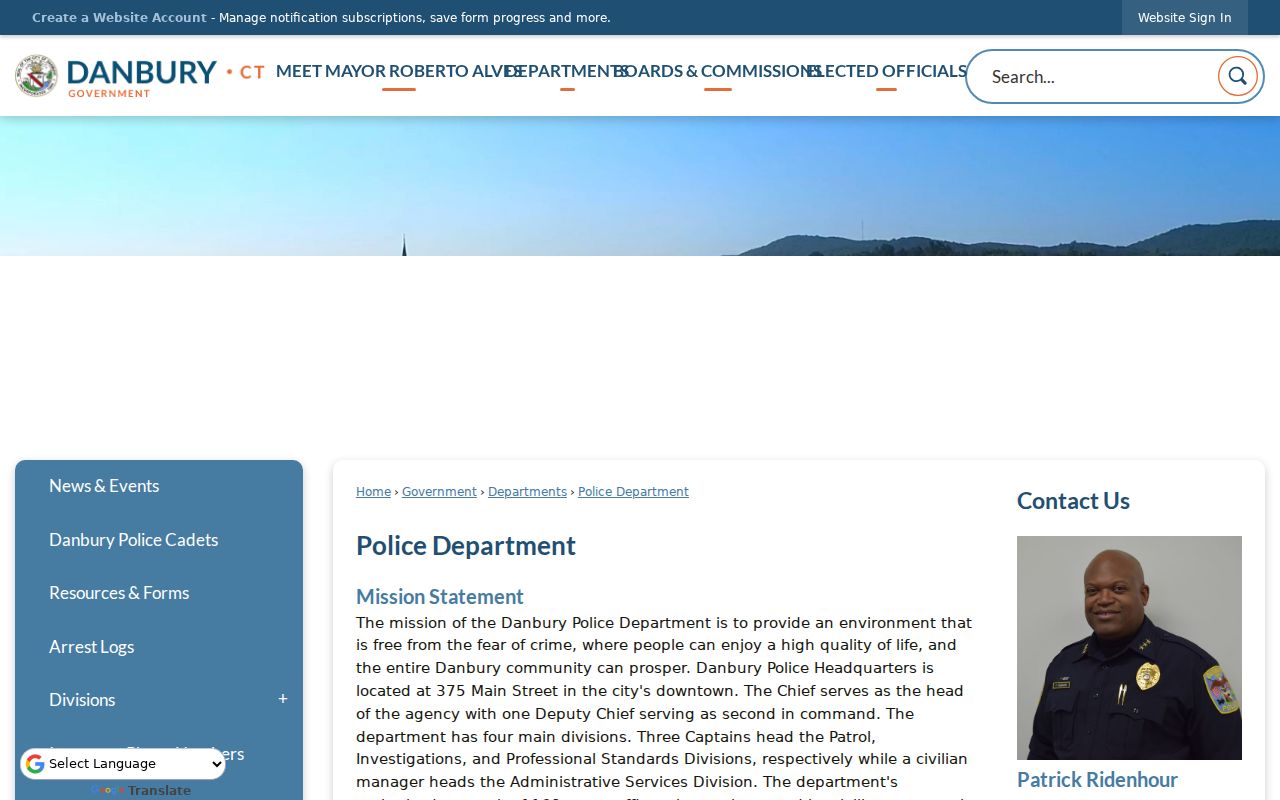
The department overview confirms the local law-enforcement source, while formal charge decisions move into the State's Attorney and court record path.
Danbury Charge Status Terms
Charge status can change more than once. A case may start with one charge list, then move through arraignment, amendments, reductions, dismissals, nolle prosequi, plea, trial, disposition, and sentencing. A public lookup should be read as a snapshot tied to the update cycle and display rules of the source. The Judicial Branch notice says criminal history information can change daily because of erasures, corrections, pardons, and other modifications.
| Status | What It Means | Why It Matters |
|---|---|---|
| Pending | The charge or case has not reached final outcome. | Do not read it as a conviction. |
| Amended or reduced | The prosecutor changed the charge or level. | The original arrest wording may not match the current court charge. |
| Dismissed | The court ended the charge without a conviction on that charge. | It may qualify for erasure depending on Connecticut law and timing. |
| Nolle prosequi | The prosecutor declined to pursue the charge at that time. | It is not the same as a guilty finding. |
| Disposition | The court recorded the outcome of the charge or case. | This is the field to check before treating a charge as resolved. |
| Erased or sealed | The record is removed from ordinary public treatment or hidden from public view. | Online absence does not prove the event never existed. |
Charges vs Convictions
Arrest records, charges, and convictions answer three different questions. An arrest record documents police action. A charge states what the prosecutor alleges in court. A conviction is a guilty outcome. Danbury searches can blur those stages if a user only sees a name, date, or offense label. The safer method is to compare the arrest source, pending court docket, conviction display, and final disposition before drawing a conclusion.
| Charge | Conviction | |
|---|---|---|
| Stage | After arrest or investigation, before final outcome. | After plea, verdict, or qualifying guilty finding. |
| Public source | Pending case search, docket, daily calendar, or clerk file. | Conviction search by defendant or docket number where display rules allow it. |
| Legal meaning | An accusation. | A finding or plea of guilt. |
| Can disappear or change? | Yes, through amendment, dismissal, nolle, sealing, or erasure. | Yes, through correction, appeal, pardon, erasure, or display limits. |
Note: A Danbury arrest log entry should never be treated as proof of conviction or final court outcome.
Danbury Police Record Channels
The Danbury Police Department headquarters is 375 Main Street, Danbury, CT 06810. The main phone is 203-797-4611. The Records and Property Division contact listed in the research is Liliana Primus, Administrative Manager, 203-797-4680. Police records can include accident and incident reports, arrest records, permits, and criminal history requests. The important phone numbers page also points users toward records-related contacts and the police headquarters address.
Police FOIA requests are useful when the needed record is a police report rather than a court case. They can request incident, arrest, accident, and related records, but active investigations, sealed warrant details, erased information, protected personal identifiers, juvenile material, or victim-sensitive material can be withheld. The court clerk is still the better source for a case disposition, plea, sentence, or certified court record.
The Danbury Police staff directory is the source for this image.
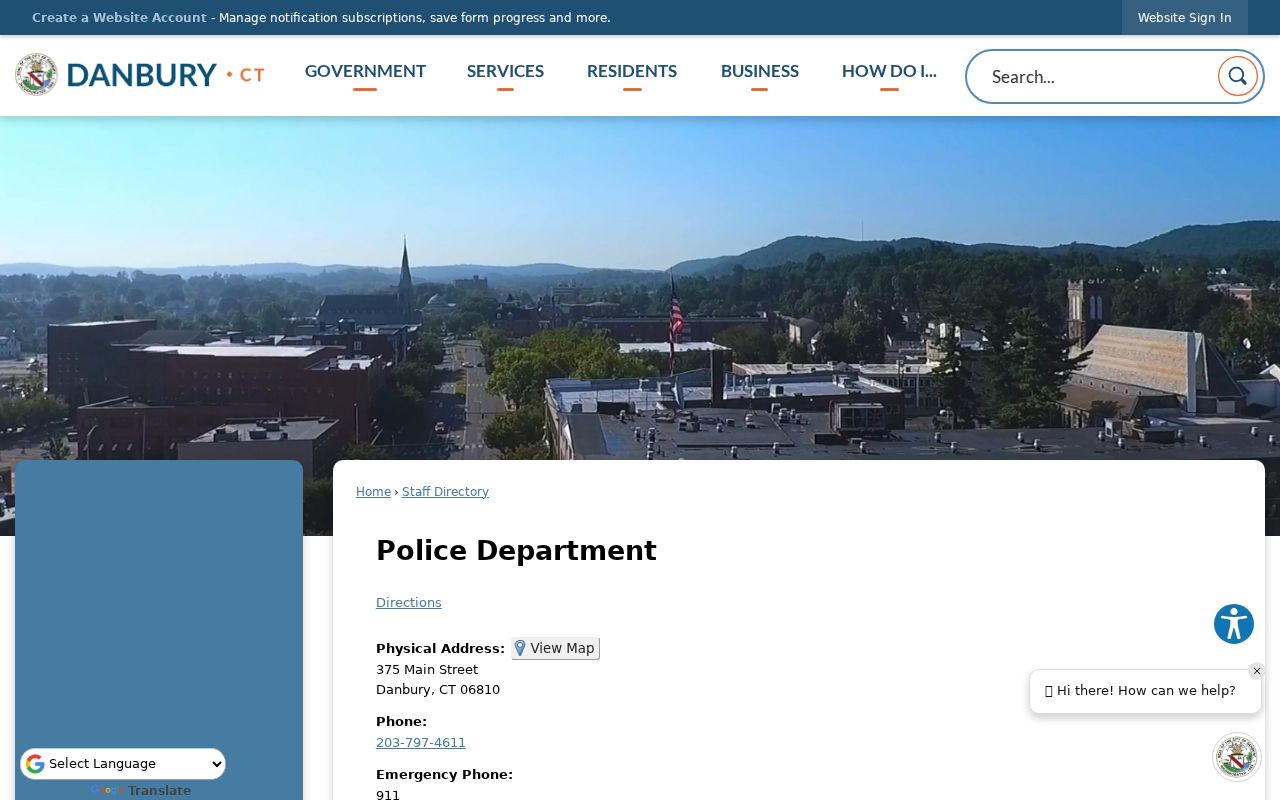
The staff directory helps identify the records channel without turning a police contact into a court-clerk contact.
The official Danbury Police important phone numbers page is the source for this image.
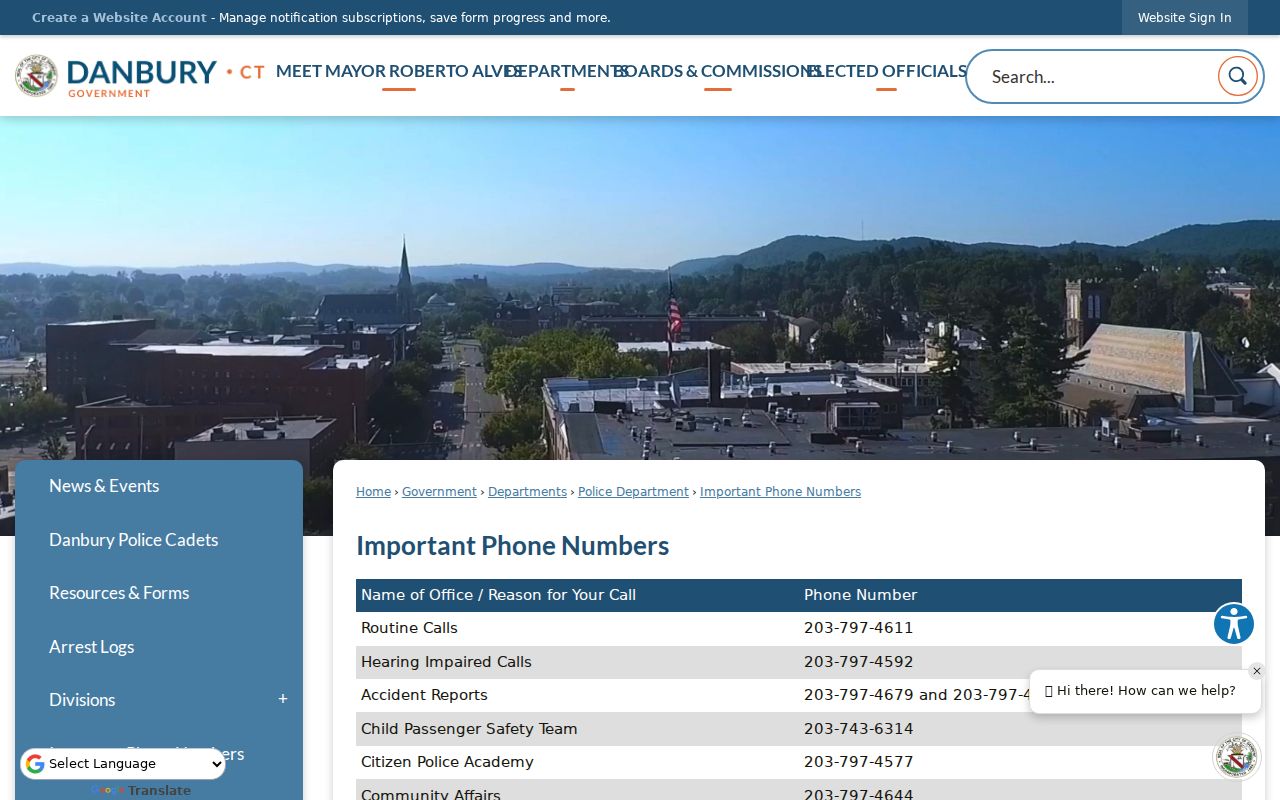
Phone confirmation is useful when a recent arrest has not yet produced a visible court entry or when a records request needs the right police division.
Restricted Danbury Arrest Records
Public access has limits. Juvenile and Youthful Offender matters are not shown in public criminal and motor vehicle conviction lookup. Infraction and violation convictions are excluded from that conviction display. C.G.S. 54-142a controls erasure for qualifying dismissed, not guilty, pardoned, and other eligible criminal records. Court sealing rules can hide filings from ordinary public access, and police FOIA can withhold active investigative material, protected personal identifiers, medical details, minor names, victim-sensitive information, or exempt records.
An erased, sealed, juvenile, or otherwise restricted arrest or charge record may not appear online even if an event once occurred. A police arrest log can remain separate from the final court outcome, and the absence of a conviction result does not prove there was never an arrest or charge. For official action, use the docket number, contact the clerk or counsel, and avoid relying on a single search screen.
Danbury Arrest Charge Contacts
Use the contact that matches the record. Police records and arrest logs start with Danbury Police. Formal charges, docket events, dispositions, and certified court copies start with the Clerk of the Superior Court. Prosecutor charging decisions are handled by the State's Attorney, but prosecutor files are not the same as public court files. Public Defender contact information is for represented defendants and families, not general public-records service.
Clerk of the Superior Court
146 White Street
Danbury, CT 06810
203-207-8600
Public Record Search
Sponsored Results